The aquamarine gemstone is loved for its serene blue tones, timeless elegance and rich history.
Often associated with clarity and calm, aquamarine has become a popular choice for fine jewellery, engagement rings and meaningful gifts.
If you’re exploring what kind of gemstone is aquamarine, its symbolism, properties and market value, this comprehensive guide will help you understand exactly what makes this sea-blue stone so desirable.
Let’s dive into aquamarine.
In other words, is aquamarine a gemstone? Absolutely.
The aquamarine gemstone is a member of the beryl family, the same mineral group that includes emerald. Its name comes from the Latin words aqua (water) and marina (sea), reflecting its ocean-like colour.
Other names for this gem are rare, as the stone is widely recognised under its traditional name. It has been treasured for centuries and is especially admired for its transparency and luminous glow.
The aquamarine’s meaning is strongly connected to calmness and emotional balance.
Historically, sailors carried aquamarine as a protective talisman, believing it would ensure safe voyages across turbulent seas.
Today, aquamarine gemstone meaning is often associated with:
Because of its soothing appearance, many people also explore the perceived healing properties of the aquamarine gemstone.
While these beliefs are symbolic rather than scientific, aquamarine is commonly linked to stress relief and mental clarity.
For a broader look at gemstone symbolism, you can read our guide on Gemstone Meanings.
Aquamarine is the birthstone for March. If you’ve been wondering which month this luminous blue gem represents, it’s traditionally linked with March birthdays.
Aquamarine birthday gifts are especially popular for those born in March, symbolising renewal and calm.
To explore birthstones across the year, see our guide to Gemstones by Month.
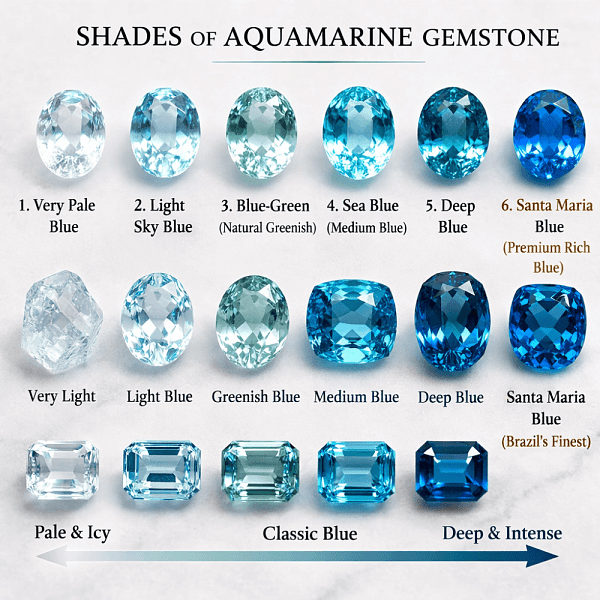
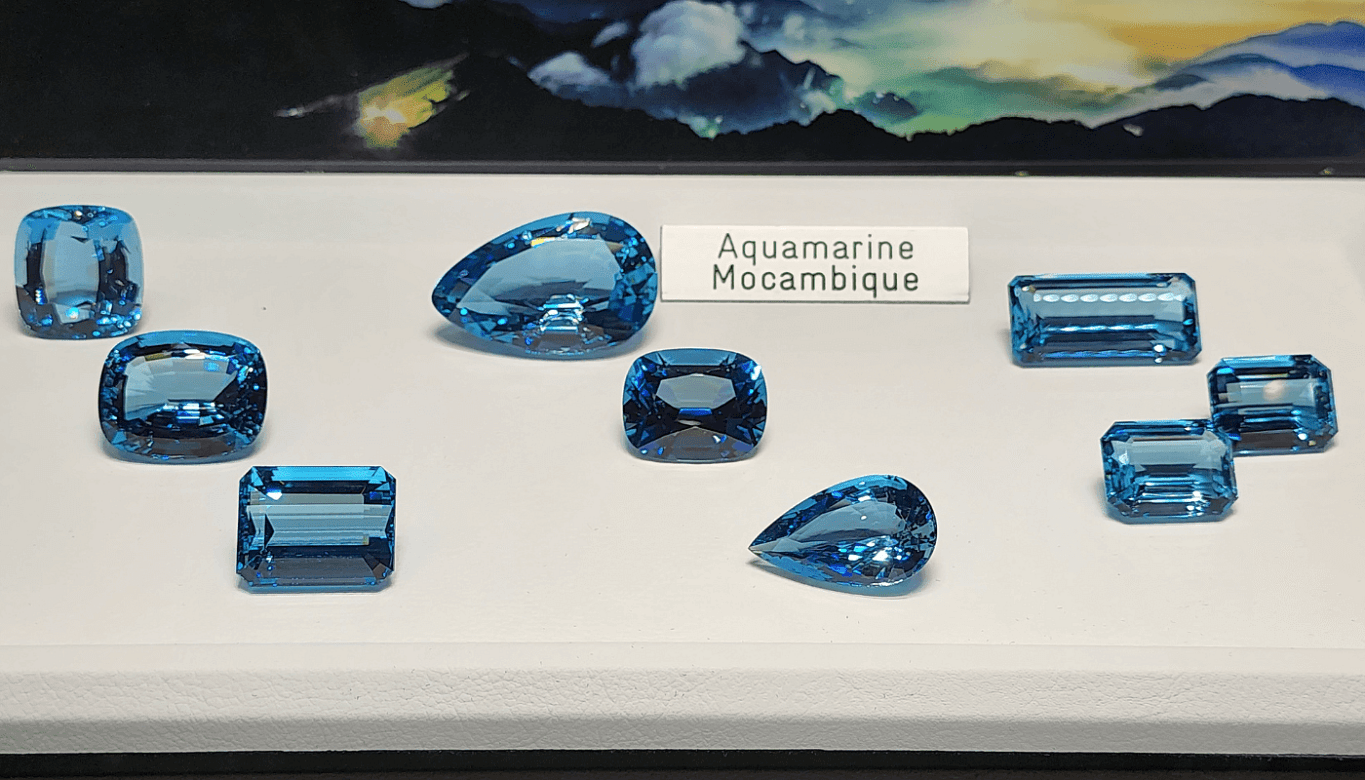
One of the most important characteristics of the aquamarine gemstone is its colour. But what colour is an aquamarine gemstone exactly?
Its colours range from very pale sky blue to deeper blue-green tones. The most valuable stones typically display a pure, medium blue shade without grey undertones.
Common shades of the aquamarine gemstone include:
Saturation and clarity directly impact an aquamarine’s value. The deeper and more vivid the blue (without becoming dark), the higher the demand.
Understanding aquamarine gemstone’s properties is essential before buying. Here is all you need to know about its core properties:
When it comes to durability, aquamarine gemstone’s hardness measures 7.5 to 8 on the Mohs hardness scale. This makes aquamarine a relatively hard gemstone, suitable for rings and everyday jewellery, though it should still be handled with care.
Because of its clarity and structure, aquamarine is often cut into oval, emerald, round and cushion shapes to maximise brilliance.
This gemstone’s history dates back to ancient civilisations. Romans believed it absorbed the spirit of the sea, while medieval healers considered it a stone of foresight and protection.
Some notable aquamarine facts:
If you’re considering aquamarine alongside other options for a proposal, our guide to the best gemstones for engagement rings can help you choose with confidence.
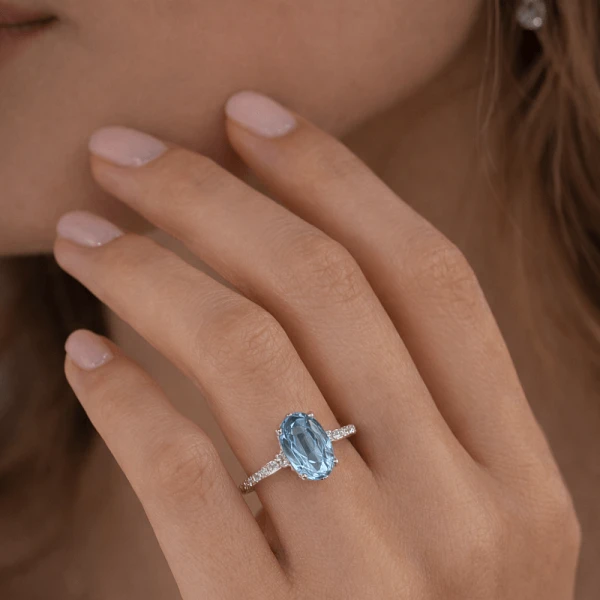
One of the most common questions we get is: what determines an aquamarine gemstone’s cost?
Well, there are several factors that influence the aquamarine’s value and they need to be taken into account in combination:
The gemstone price per carat can vary widely. Lighter stones may start from a few hundred A$ per carat, while fine-quality, deeper blue stones can reach significantly higher figures depending on size and origin.
Unlike diamonds, aquamarine pricing is less standardised, so evaluating colour and clarity by a trusted jeweller is even more crucial.
If you’re wondering where can you find aquamarine gemstone deposits, major sources include:
Brazilian aquamarine is particularly known for producing large, high-clarity crystals.
If you’re considering purchasing an aquamarine gemstone for your jewellery collection or as a gift:
Explore aquamarine jewellery options in our fine jewellery collection to see how different settings enhance the stone’s natural beauty.
Thanks to its solid hardness, aquamarine is suitable for regular wear, but proper care matters. Our expert jewellers at GS Diamonds advise the following:
Ultrasonic cleaners are generally safe for untreated stones, but always confirm with your jeweller first.
The aquamarine gemstone combines gentle colour, solid durability and meaningful symbolism. Its association with calm and clarity, combined with its March birthstone status, makes it both sentimental and wearable.
Whether you’re drawn to its soothing blue shades or exploring aquamarine gemstone value for a future purchase, this ocean-inspired stone offers beauty without overwhelming intensity.
If you’d like to explore different coloured stones, explore GS Diamonds’ curated gemstones collection to compare aquamarine with other precious gems.